Most people know of the Toy Story movies, but what are the first things you think of when you hear that title? Toys, definitely. Kids, probably. Maybe even pizza and aliens, and most recently … peptides?
That unlikely combination just became a reality as Toy Story 5 partnered with Korean skincare brand Sungboon Editor for a pop-up in SoHo, New York, held from August 6 to 9. The event was marketed as a way to find your “glow buddy,” likening Sungboon Editor’s array of products to a Toy Story “buddy” and encouraging customers to find which Sungboon Editor product made them “glow,” including kojic acid niacinamide, PDRN, and retinol.
The pop-up featured various stations where visitors could explore branded products, including a bin of samples, areas to learn about products for specific skin concerns, and a spin-to-win machine filled with Toy Story character squishies. Each customer (even the kids) could leave the pop-up with a goodie bag, decorated with Buzz’s, Woody’s, and Jessie’s smiling faces plastered on peptide and exfoliation acid products.
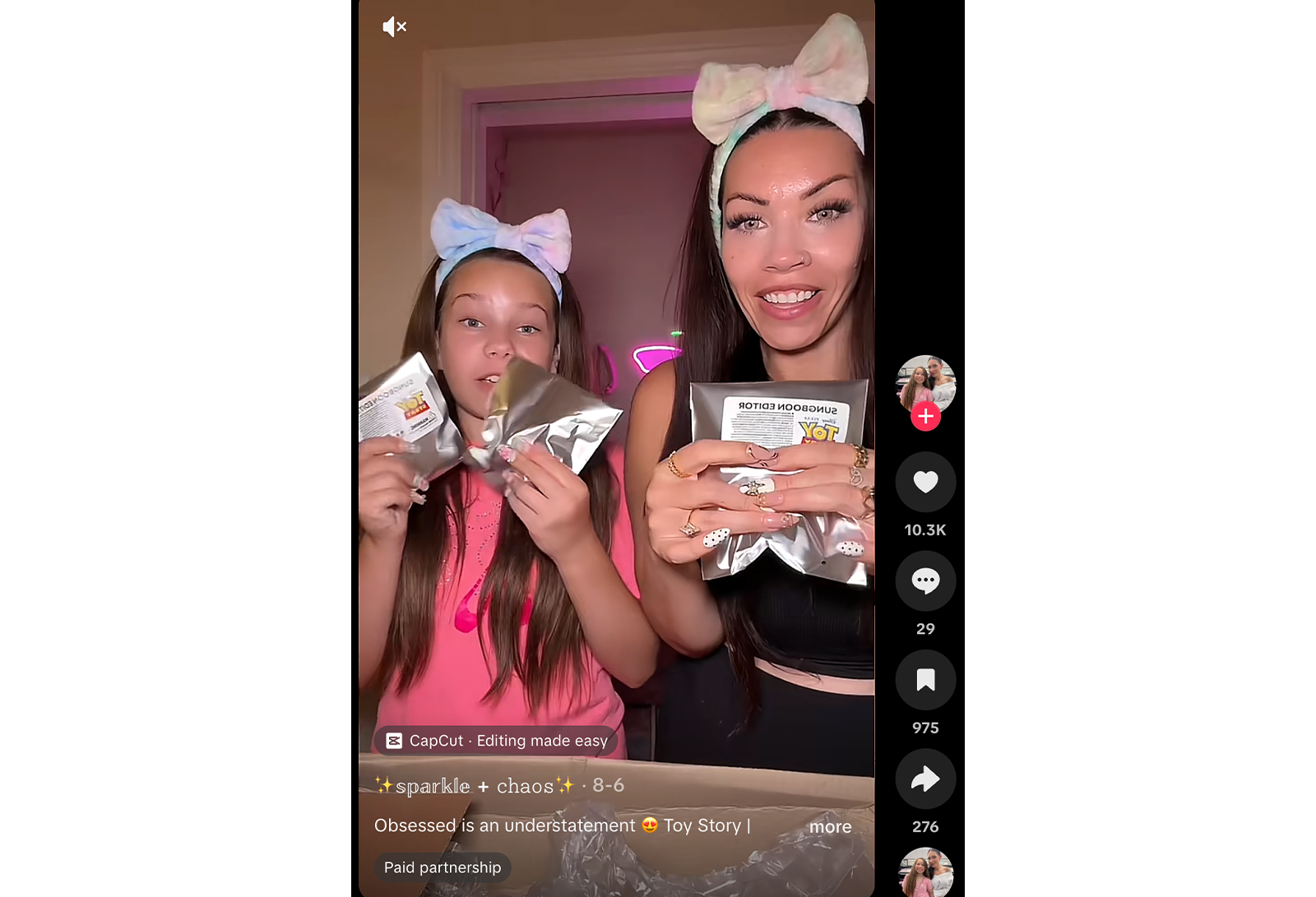
The marketing tactic was a hot topic of conversation both at the event and online, sparking disputes over a children’s movie franchise's advertising of peptide beauty products.
Prior to the pop-up event, Sungboon Editor had paid partnerships with TikTok creators to promote the products, including the mother-daughter duo @sparkleandchaos. The video showed the two unboxing various Toy Story-themed products, including the mother, who looked like she was drawing a serum from a prescription-esque bottle with a syringe.
TikTok creator @popcultureprincessss posted a video—which currently has over 50K views—discussing this issue while walking past the SoHo pop-up, describing the collaboration as “dystopian.” The public outcry mirrored the backlash around Shay Mitchell’s Rini children's skincare launch in November last year.
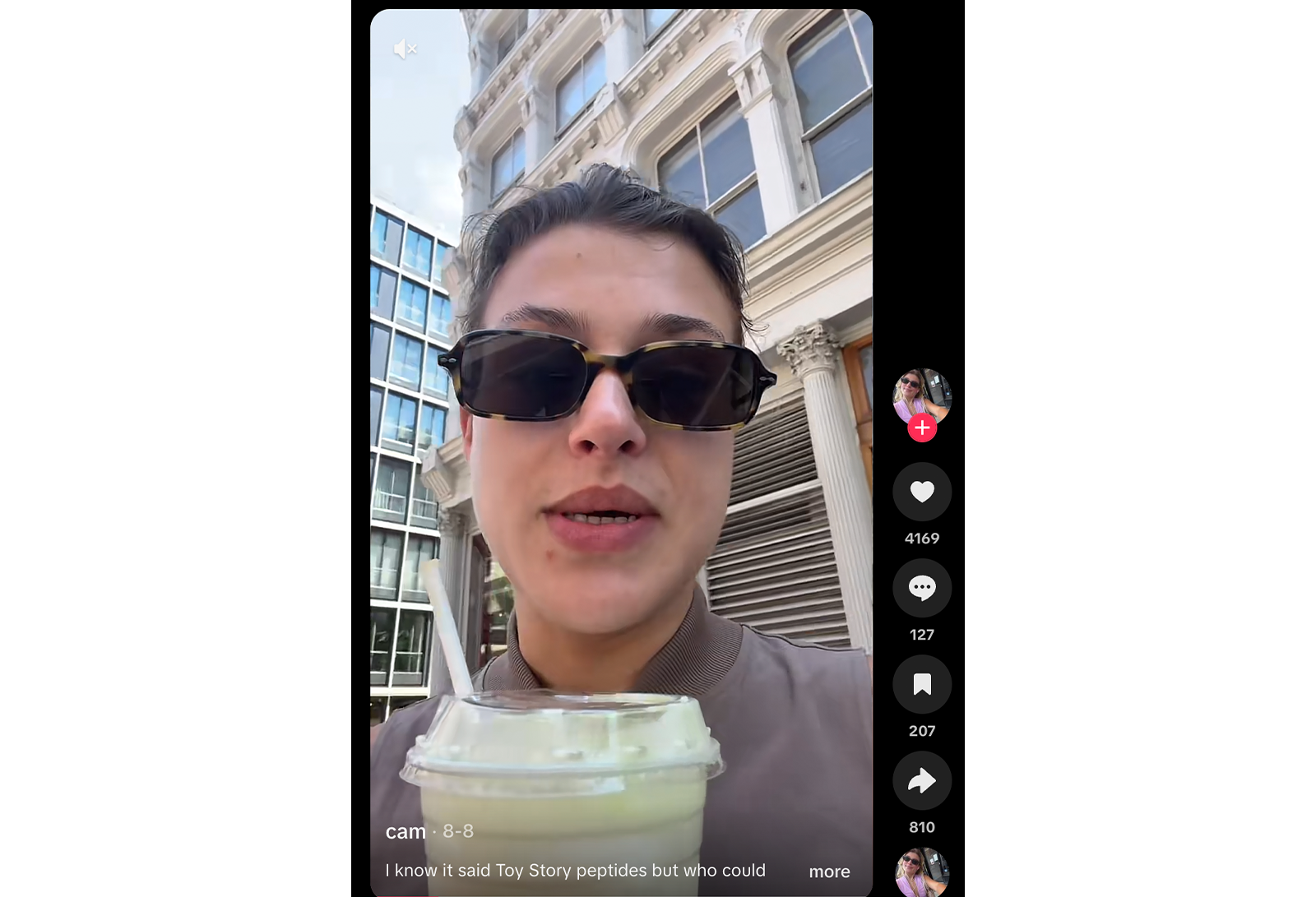
The creator later expanded on her discomfort with the Toy Story launch in the comments section of her video, explaining, “It rly [really] upset me.” Many of the 125 comments agreed with her sentiment, with users writing, “Peptides and Toy Story do not belong in the same sentence,” while others added, “I feel like a movie marketing to children does not need a collagen booster marketing crossover,” and “Why isn’t Disney shutting that down?”
The same conversations occurred in person, as attendees seemed confused about how Toy Story related to adult skincare products, which only fueled their questions when they noticed several children in line for the pop-up. A visitor, Kali Fletcher, told BeautyMatter she recalled hearing a passerby say, "Why are they giving peptides to kids?”
Once inside the event, Fletcher saw a mother and her four kids, three of them holding bags of product. “They [didn’t] even look like they were out of elementary school,” she said. Another visitor, Xanaria Jackman, recalled the same thing, noting that the bags featured the same skincare products available to all customers, not just the free squishy toys.
A Sungboon Editor representative responded to this discourse by telling BeautyMatter that the collaboration was developed for “adult beauty consumers and longtime fans of the franchise,” making it clear that the event intended to lean into nostalgia rather than promote peptides to children.
However, the question of normalizing adult skincare ingredients is central to this story. In this case, Sungboon Editor is presenting beauty ingredients that have historically been marketed to and resonated with individuals whose skin is mature enough to tolerate active ingredients, alongside iconic children’s movie characters. In this case, Sungboon Editor is promoting a product line formulated with peptides, acids, and retinol, presenting these products as fun and accessible through the language of “glow buddies” and using Disney characters on product packaging. Strongly acidic and retinol-based products can irritate and burn adult skin and have the potential to do the same, or worse, to children’s unsullied skin. This reflects how once-specialized beauty ingredients are becoming part of a mass-market lifestyle and are becoming tied to pop-culture hype.
As of press time, Disney declined to comment on this story.
Beyond the discourse on skincare for children, the event encountered hiccups before the first visitor even gained entry. Individuals had reportedly lined up for entry since 2 a.m., with some, such as Jackman, traveling from New Jersey to attend.
However, the time spent in line did not seem to matter compared to the chaos that followed. The crowd appeared larger than the event staff had anticipated, prompting them to create a QR code for a digital queue to maintain order. The staff began distributing the QR code, which quickly spread throughout the line and online to people who were not in attendance.
This sparked immediate outrage, as people in the back of the line were receiving the QR code before those in the front, and others were even bringing in people who had not waited at all. According to longtime Disney fan Shapri Parker, a woman in the back of the line found the QR code on a Discord server and shared it with her and others waiting in the back of the line, allowing them to move up and leave to come back later.
Tensions rose as customers had altercations with staff and each other over line-skipping. Conditions were so dire that some visitors fainted due to the 93°F heat. Fletcher reflected on the commotion around her, explaining to BeautyMatter that “One girl got so frustrated she pulled another girl's ponytail; someone even said that someone spat on one of the managers of the pop-up.”
During the drama, the police arrived to address the crowd and bring the chaos under control. Fletcher said people were crying out to the staff and police, “We're not being heard! We're not getting information!” to which a staff member allegedly repeatedly responded, “I don't care.”
Fletcher recalled, “[The staff member] said we should be grateful that they're doing this for us.” These replies provoked more anger among attendees, and the event eventually closed around 1 p.m., though it was advertised to go until 6 p.m.
The staff described the event's closure as final, at which point Jackman and Fletcher decided to leave. Jackman said she noticed, as she was exiting the line, that this did not apply to everyone, as she observed a woman “flirt with the police officer,” making it clear to him that she had a lot of followers on TikTok and Instagram, and was subsequently allowed into the event during its stated closure. At this point, Parker decided to stay and wait and was eventually admitted to the event when it reopened at around 3 p.m.
The brand representative told BeautyMatter that Sungboon Editor takes the reports regarding attendee frustration and staff interactions seriously and regrets that some guests did not have the experience the brand intended. "After encountering challenges with the QR-code system, the team implemented a wristband-based process the following day to improve communication, line management, and the overall attendee experience."
“I probably was in there for 10 minutes,” Parker said, pointing out the irony as she had been waiting in line for almost six hours. Not all feedback was negative: Fletcher and Jackman returned to the event the next day and said it was a much calmer, more organized experience, as the staff ditched the QR codes and instead gave customers wristbands to maintain order in line.
The event brought back nostalgia for Influencer and blogger Kimberly Weling, who told BeautyMatter that she found the themed, color-coded packaging helpful for targeting specific skin concerns.
At its core, the events of the Toy Story x Sungboon Editor collaboration are less about one individual or a chaotic pop-up and more about the trajectory of beauty marketing. Brands are increasingly leaning into entertainment, nostalgia, and viral culture to create events and products that feel culturally relevant, such as the recent collaborations by Rare Beauty, Urban Decay, and TRESemmé with Off Campus stars, as well as r.e.m. Beauty’s Wicked partnership.
Although such events can be incredibly successful and engaging, the Toy Story x Sungboon Editor pop-up was an example of the complications that can arise with such a hyped moment. The Toy Story activation ultimately demonstrates both sides of beauty’s growing reliance on entertainment IP. Sungboon Editor secured something increasingly difficult to manufacture: genuine urgency. Consumers traveled across state lines, queued for hours, posted about the event, argued over access, got in physical fights, and returned after an unsuccessful first attempt.
In terms of attention, the collaboration worked. But attention is not the same as brand control.
As beauty companies increasingly borrow fandom from films, celebrities, sports, and entertainment franchises, they also inherit the audiences, expectations, and cultural associations attached to those properties. For Sungboon Editor, Toy Story offered instant recognition and multigenerational nostalgia, but its continued relevance among children complicated the positioning of an otherwise adult skincare activation.
The crowd-management issues added another problem. Scarcity, freebies, social media, and recognizable IP can create demand far beyond a brand’s existing customer base, transforming experiential marketing from a brand-building exercise into an operational test.
That does not make entertainment collaborations inherently problematic. If anything, their continued proliferation suggests they have become an increasingly valuable discovery tool as brands compete for attention beyond the beauty aisle. But the Sungboon Editor activation shows that the stronger the cultural property, the greater the responsibility to think beyond the collaboration itself to who it attracts, how that audience behaves, and whether the physical experience can withstand the hype.
Beauty’s IP era is clearly nowhere near infinity and beyond. The harder question is whether every franchise capable of generating attention is equally equipped to sell skincare.